Share on social
Oct 7, 2026
Lorem ipsum
Cybersecurity needs to get ahead of the attacker. Here’s how.
For years, cybersecurity has become increasingly focused on speed of response. Faster detection, faster investigation, and faster recovery have all become hallmarks of a mature security operation.
But there is a problem with building security primarily around what happens after an attacker has acted: by the time you are measuring how quickly you detected and responded to an attack, the attacker has already had an opportunity to succeed.
The starting point needs to move earlier. Instead of focusing efforts on how quickly you can respond when something goes wrong, the opportunity lies in focusing resources on identifying and removing the opportunities that allow attackers to succeed in the first place.
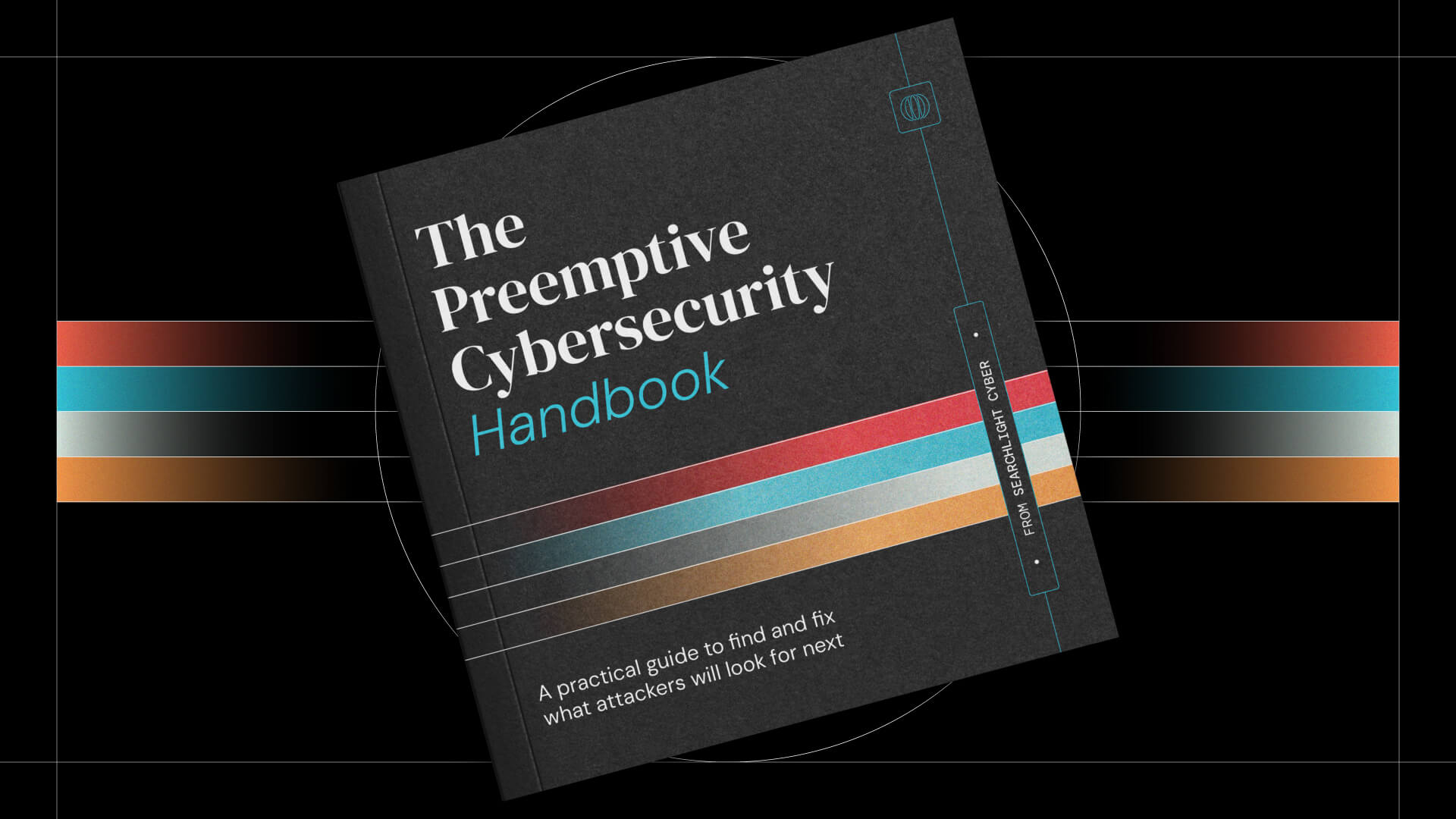
That is the idea behind preemptive cybersecurity, and it is the subject of our new book, The Preemptive Cybersecurity Handbook.
Download your free copy of The Preemptive Cybersecurity Handbook
What Does Preemptive Actually Mean?
Preemptive cybersecurity isn't about predicting every attack or eliminating cyber risk altogether. It is about moving security decisions earlier in the attack lifecycle, while defenders still have an opportunity to change the outcome.
That means understanding where you are exposed, determining which exposures actually matter, and acting before an attacker can turn them into an incident.
It is a deceptively simple idea, but putting it into practice requires a different way of thinking about security. The handbook explores the principles behind that shift, from continuously understanding your attack surface to validating what is actually exploitable and prioritizing the exposures that present the greatest opportunity to an attacker.
Start By Seeing What the Attacker Sees
One of the biggest challenges facing security teams is knowing what their organization actually looks like from the outside.
Your asset inventory might tell you what you believe you own. Your vulnerability scanner might tell you what it knows is vulnerable. But attackers are not constrained by either of those perspectives. They are looking for anything they can discover, reach, exploit, or use as a path to something valuable.
As environments become more dynamic, that gap becomes harder to manage. New assets appear, infrastructure changes, third parties introduce new dependencies, and exposures can emerge between assessment cycles.
The handbook explores what it takes to build a more complete picture of your true attack surface, and why continuous visibility is becoming a prerequisite for getting ahead of attackers.
What Happens When the Vulnerability Hasn't Even Been Disclosed?
The traditional vulnerability management process assumes there will be a window between a vulnerability becoming known and an attacker exploiting it. But already in 2026 that window has collapsed.
Attackers are increasingly capable of finding and weaponizing vulnerabilities at speed, while defenders cannot assume that public disclosure will always be the starting point. The handbook looks at what this means for the future of vulnerability management, including the growing importance of proactive vulnerability research and the race to discover vulnerabilities before attackers do.
Time is becoming one of the most valuable advantages a defender can have. And that time window is only available if the defender gets there first.
What Does the Attacker Actually Care About?
Not every exposure represents the same opportunity.
A vulnerability's severity score can tell you something about its potential impact, but it doesn't necessarily tell you whether an attacker can exploit it in your environment, whether it provides a route to something valuable, or whether attackers are actually targeting it.
This is where Preemptive Threat Exposure Management (PTEM) comes in.
The handbook introduces PTEM as a way of bringing exposure data and real-world attacker intelligence together, helping security teams understand not just what could be exploited, but what represents a credible opportunity for an attacker right now.
The shift from theoretical risk toward evidence of real-world opportunity is at the heart of the book.
Becoming Preemptive is About More Than Technology
Even the best visibility and intelligence won't make an organization preemptive on their own.
The final part of the handbook looks at what needs to change across the organization: how security teams work with engineering and infrastructure, how exposure becomes a shared responsibility, how leaders measure success, and how organizations can understand where they are on the journey from reactive to preemptive security.
The book introduces a Preemptive Cybersecurity Maturity Model to help organizations assess that journey and identify where they need to improve.
Becoming preemptive requires more than buying another tool, and actually changing how an organization thinks about risk and when it chooses to act.
You Don't Need to Predict the Future. You Just Need to Act Earlier.
Preemptive cybersecurity doesn't promise that every attack can be stopped. Detection, response, and recovery will remain essential.
What it does offer is a different way to think about the problem: find opportunities for attack earlier, understand which ones matter, and remove them while there is still time to change the outcome.
Want to delve deeper?
Get the Full Handbook
Inside, you'll find the ideas, frameworks, research, and practical guidance behind a preemptive approach to cybersecurity, including the six principles of preemptive security, the PTEM framework, the changing role of vulnerability research, attacker reality, ransomware, security metrics, and the path toward building a preemptive organization.
Download your free copy of The Preemptive Cybersecurity Handbook

A practical guide to moving beyond reactive security and understanding how preemptive strategies and capabilities can help organizations identify, prioritize, and act on exposure before attackers exploit it.
The handbook is written for both cybersecurity leaders and practitioners looking to understand preemptive cybersecurity strategies, the technical capabilities behind them, and how to apply these within their own security programs.
You can download the digital version as a PDF or EPUB.
No. The handbook is a practical resource for security teams regardless of the tools or platforms they currently use.