Searchlight Threat
Know who’s targeting you, before they reach you
Searchlight Threat turns raw attacker activity into decisions your team can act on
Know which exposures to prioritize, when to open an investigation, and what to tell leadership. It shows you who’s targeting your organization before they reach your network.













Current Reality
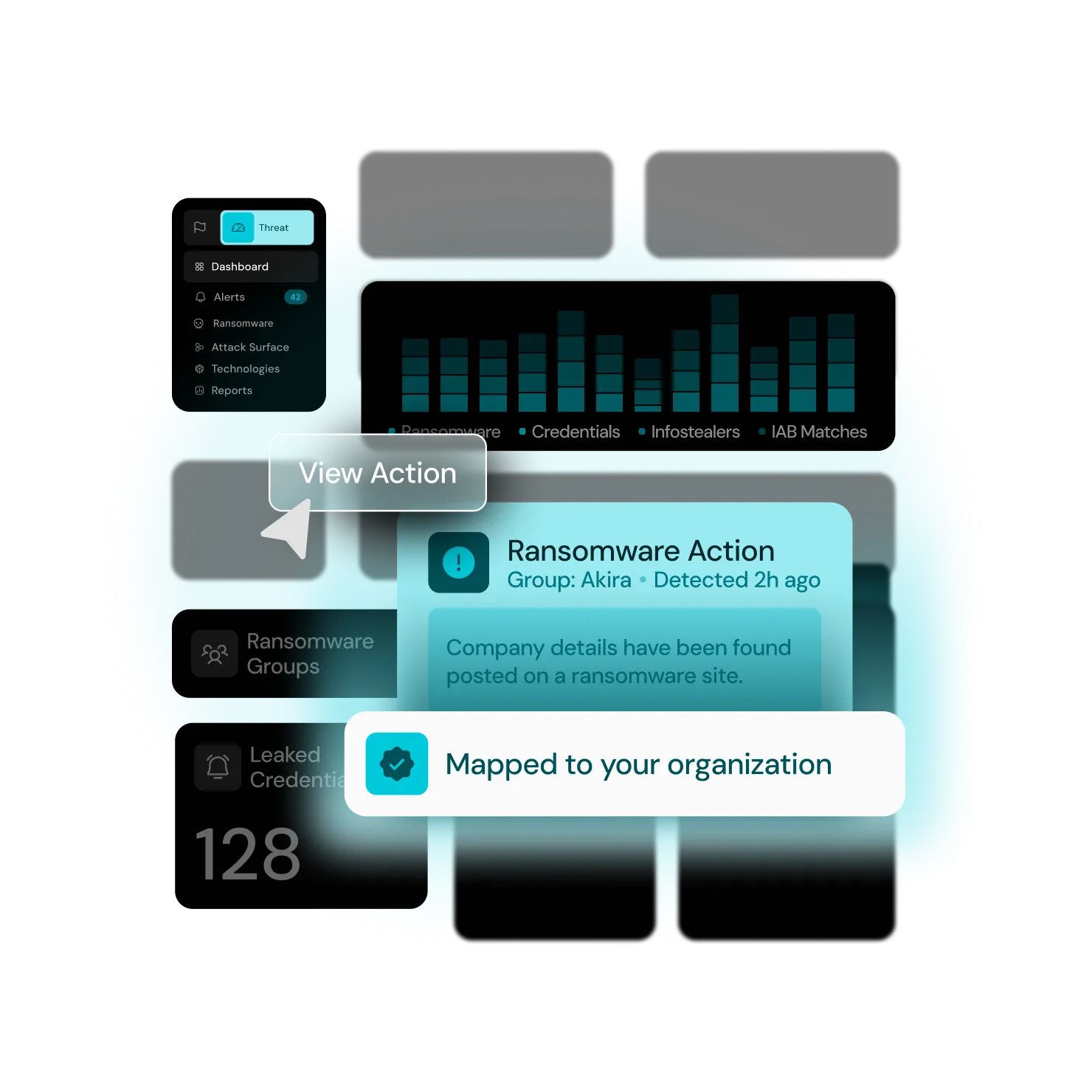
You’re drowning in threat data, and none of it is about you
Most threat intelligence arrives as finished reports about the global landscape: new groups, new campaigns, new tactics. It’s interesting, but it doesn’t tell you what’s being aimed at your organization, so your team can’t tell which threats to act on and which to ignore.

Generic threat reports add to the noise
By the time you’ve sifted through the data and confirmed a threat as yours, it’s usually already at your perimeter.
The Solution
Turn attacker activity into decisions
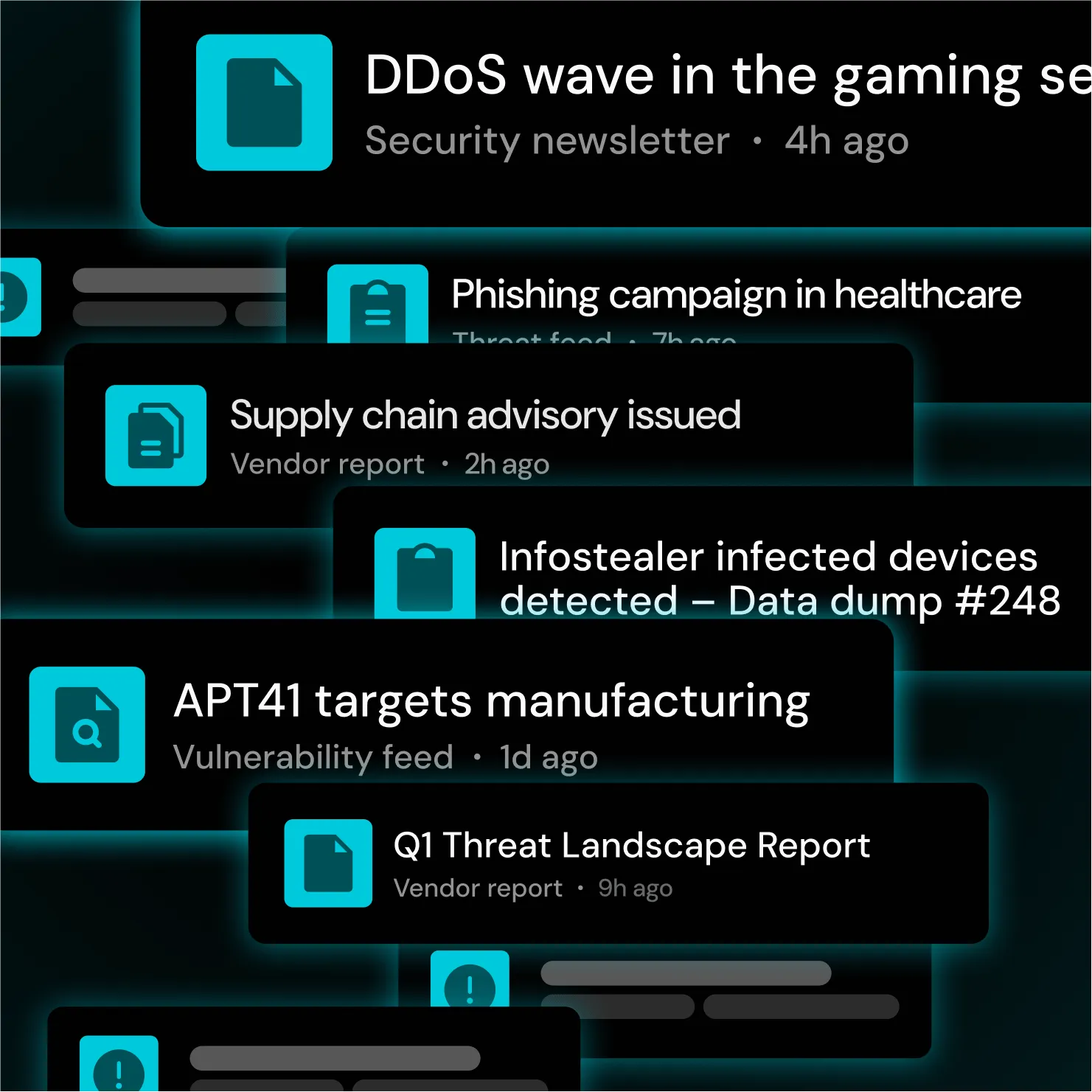
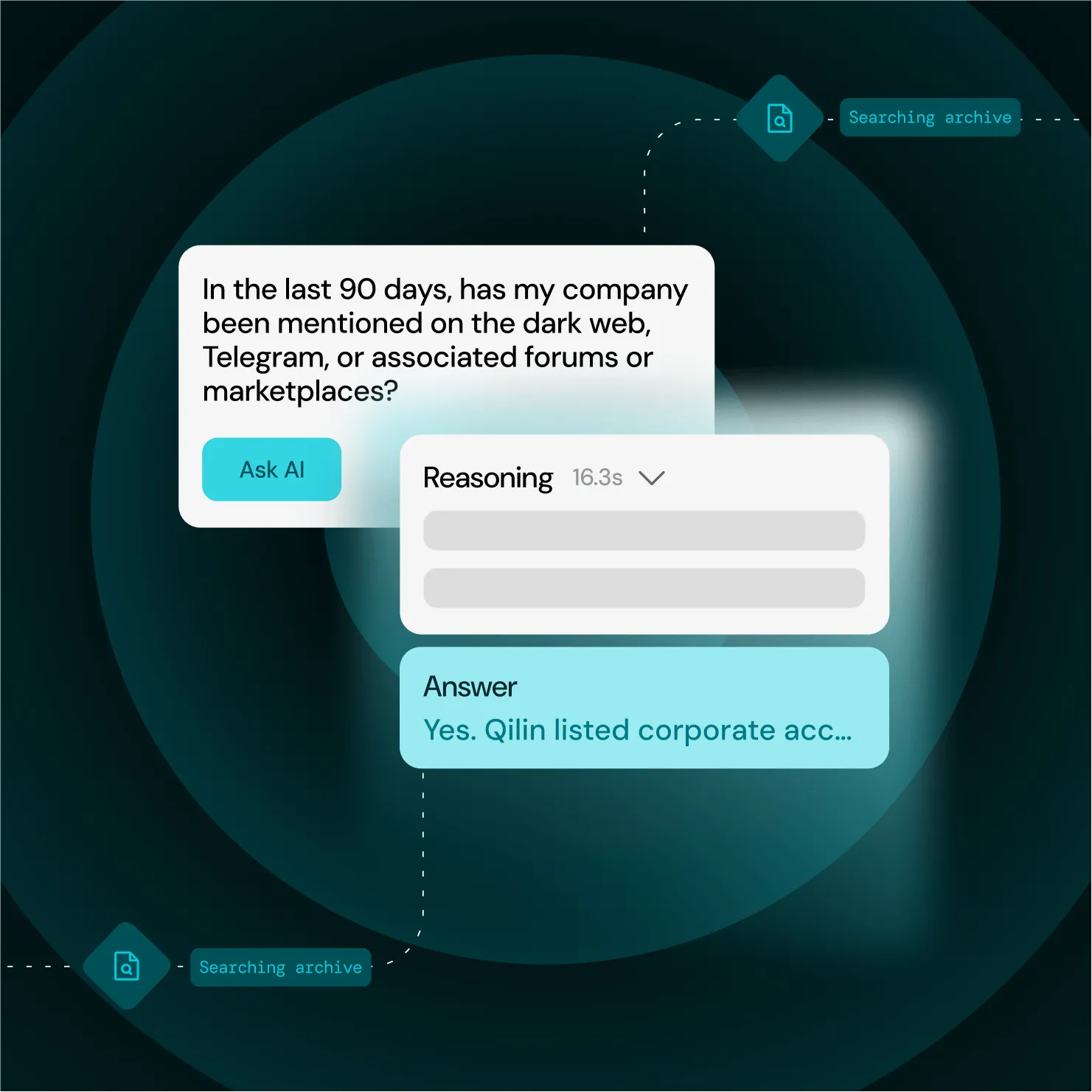
Searchlight Threat continuously observes where attackers operate and maps what it finds to your organization: your credentials in circulation, phishing infrastructure built to imitate you, the groups discussing you, and the exposures they’re actually targeting.

Every alert with context already attached
Your team decides what to prioritize, when to investigate, and what to brief– based onevidence, not guesswork.
Take Action
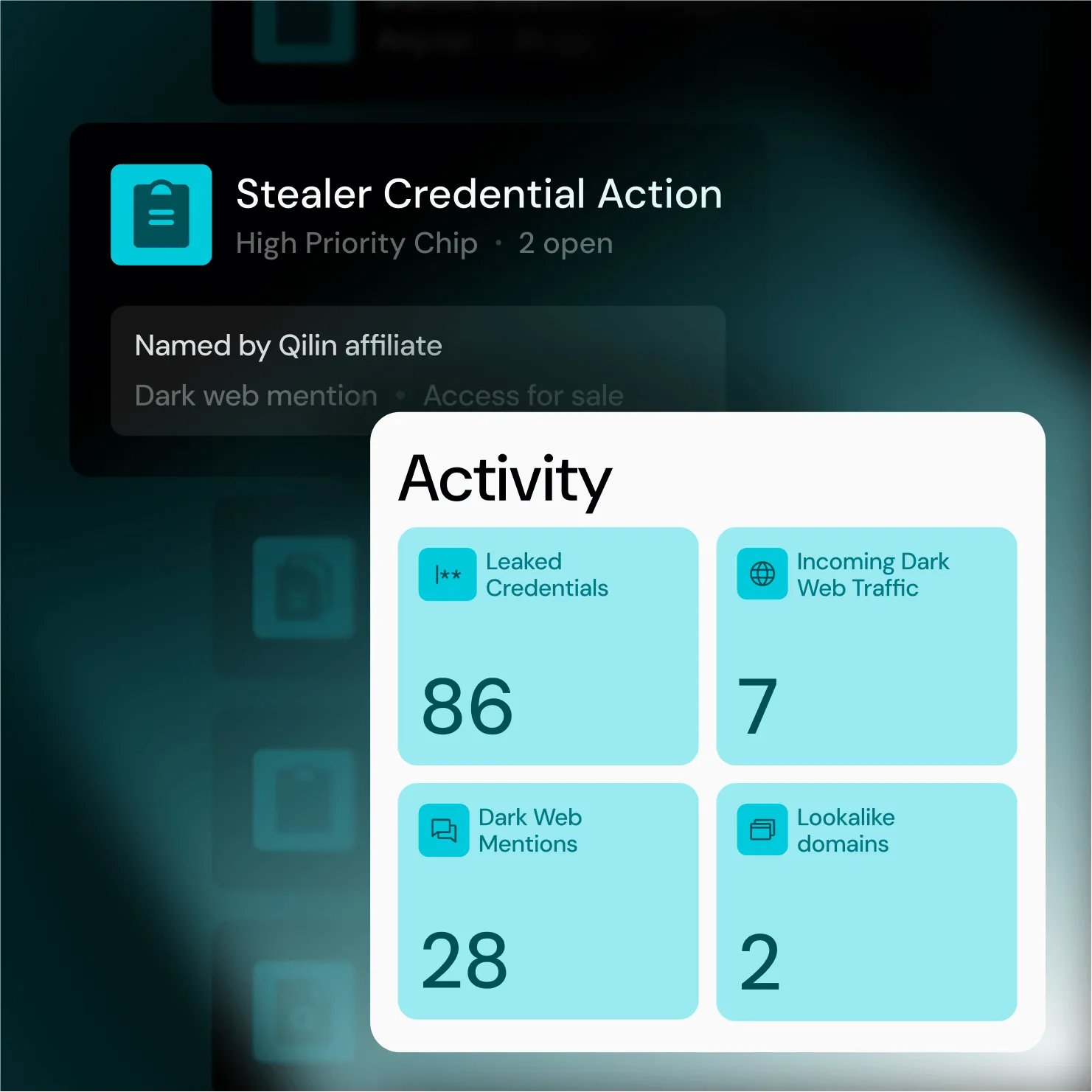
See it, understand it, & know who’s behind it

140xfaster intelligence gathering vs manual analysis
Key Capabilities
Uncover threats, stop attacks

Every alert arrives ready to act on
Alerts land with the actor, the source, and MITRE ATT&CK mapping already attached, and can be delivered into your SIEM, SOAR, and ticketing tools. We filter out the noise, so what reaches your analysts is relevant and ready to act on.

What criminals delete, you keep
Collection runs continuously across the clear, deep, and dark web, forums, marketplaces, leak sites, and encrypted channels, and stays queryable even after a source is taken down. Evidence doesn't vanish when an actor burns an identity and starts over, so you never miss a warning sign of an attack.

Catch what's leaving your network for the dark web
Searchlight sees traffic moving between your network and the dark web, the earliest sign of malware calling home, data being exfiltrated, or a machine inside your perimeter reaching out to Tor. Your team can connect it to other attacker activity and act before it becomes an incident.

Get the full picture
Searchlight Exposure
Threat tells you what’s being targeted. Exposure tells you what’s exploitable
The Searchlight platform shows you where you're exposed and where you're being targeted.
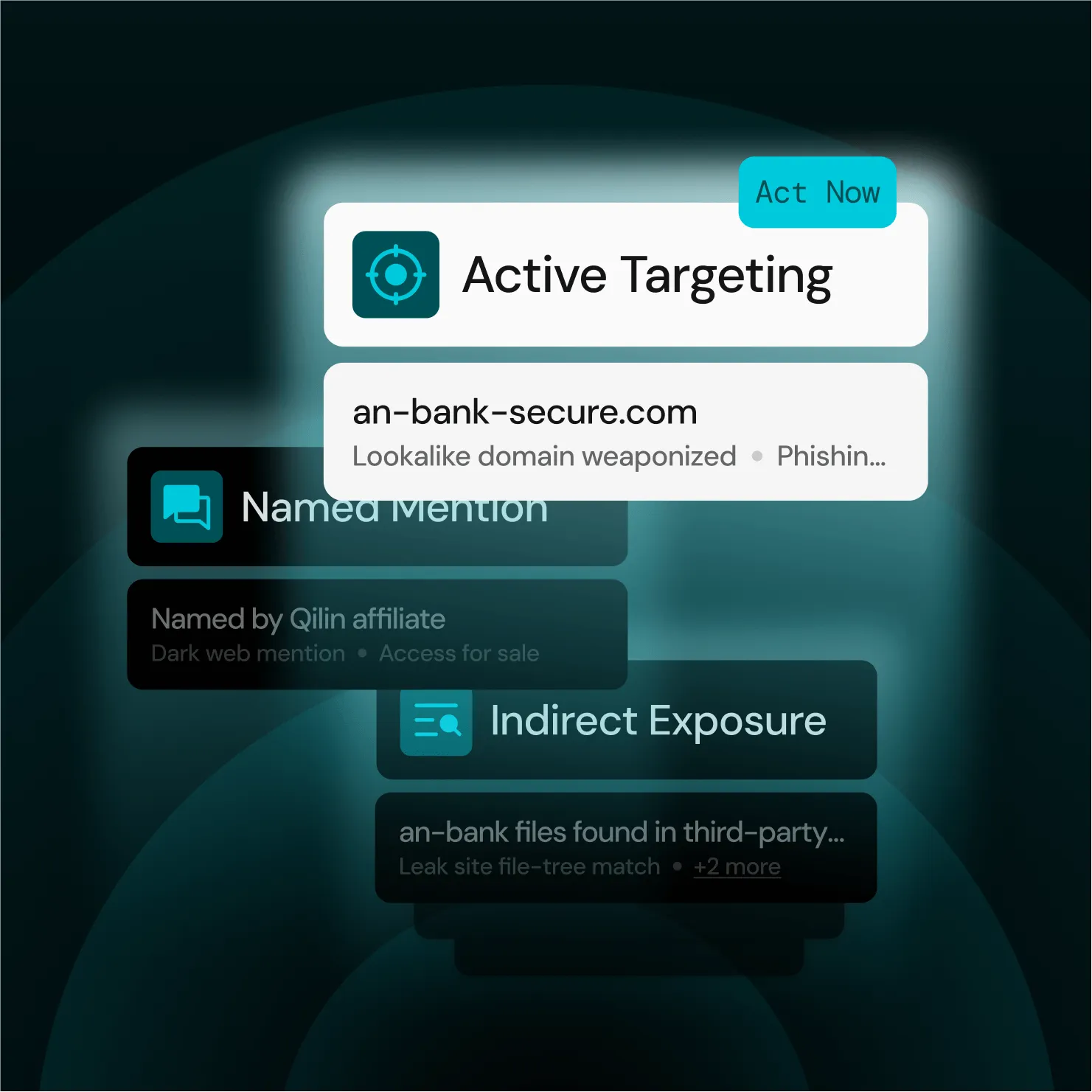
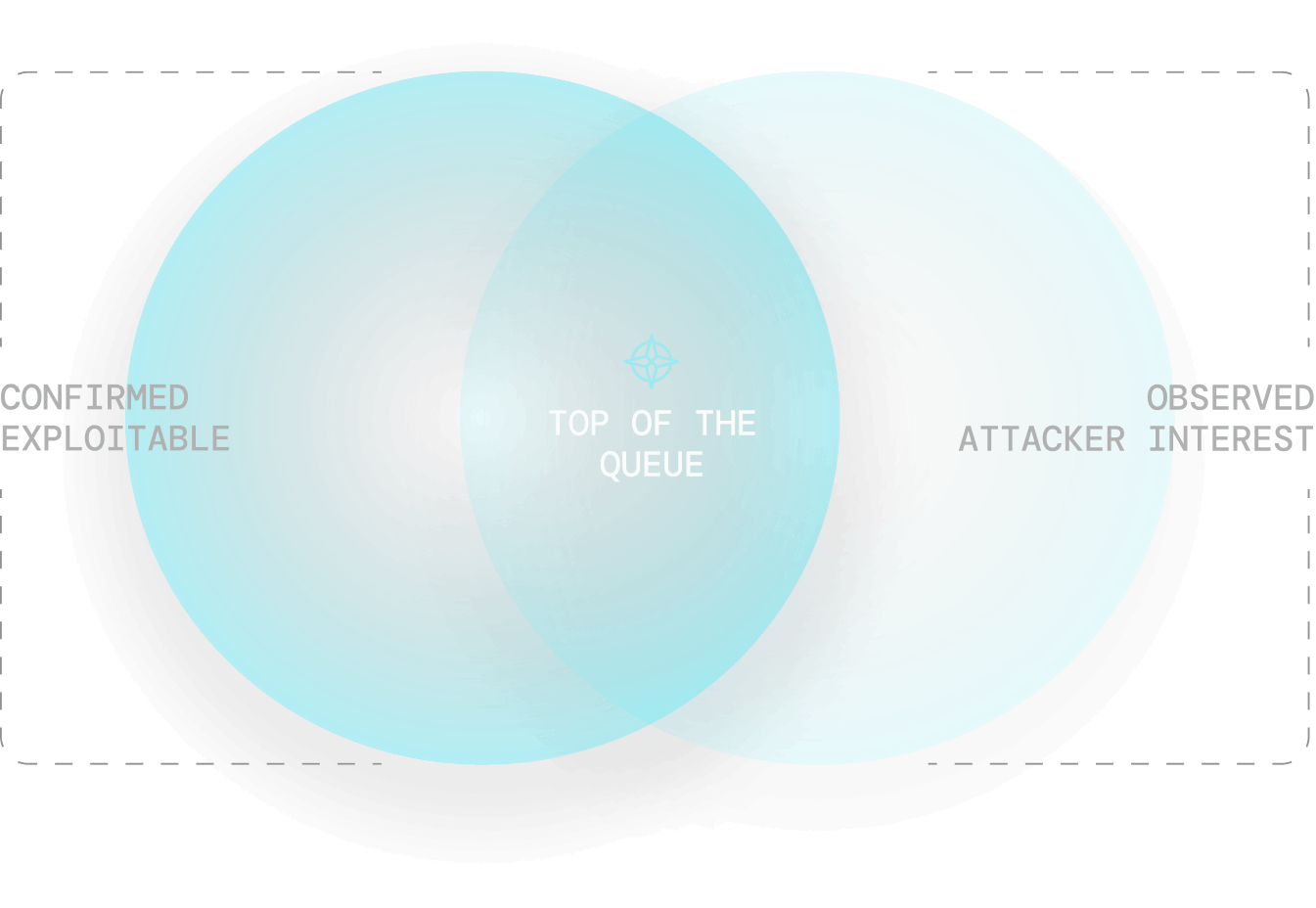
Threat observes the first, Exposure proves the second, and where they meet, the exposures that are both exploitable and actively targeted, rise to the top of your queue.
FAQ
About Searchlight Threat
A threat feed gives you static reports about the global landscape. Searchlight continuously maps live attacker activity to your organization, your credentials, your brand, the exposures attackers are targeting, and delivers it as alerts your team can act on, with the actor and context attached. It tells you what’s aimed at you, not what’s happening in general.
Attackers conduct reconnaissance and discuss their targets on hidden parts of the internet before they strike: registering lookalike infrastructure, trading credentials, discussing targets. Searchlight surfaces that activity as it forms and maps it to your organization, so your team acts while a threat is still being assembled, not after it has launched.
Searchlight tells you which of your exposures attackers are actually discussing and targeting, complete with expert profiles on the adversary, so your prioritization reflects real-world attacker interest instead of a severity score. The exposures Searchlight discovers that have active attacker attention rise to the top of the queue.
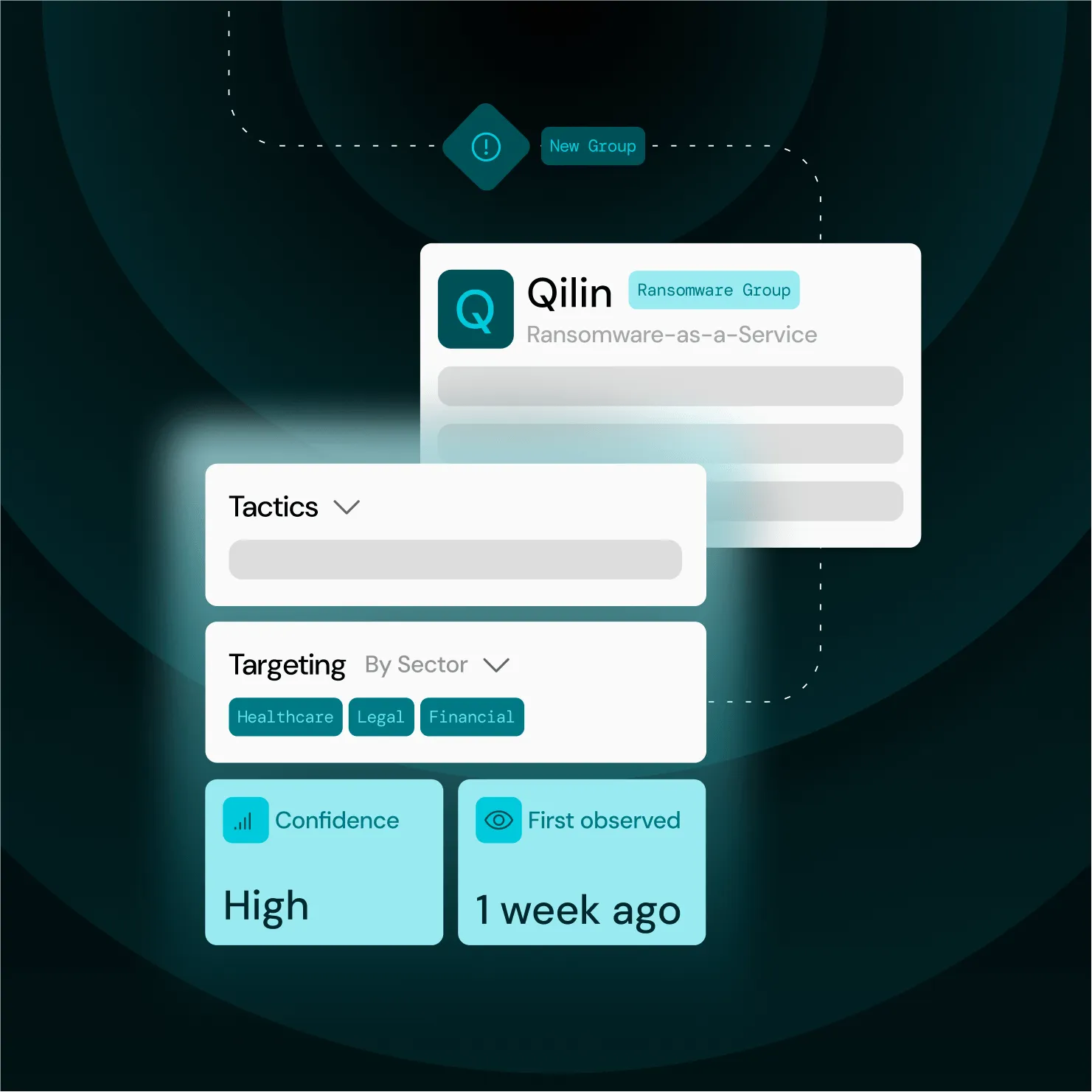
When a new adversary is named, or a peer in your industry is hit, Searchlight gives you one place to profile them, tactics, victims, infrastructure, and indicators, so you can decide whether and how to prepare, and brief leadership from a clear picture instead of piecing together open-source reports under pressure.
You can monitor and investigate, on the same dataset. Alerts arrive mapped to your organization; when you want to go deeper, plain-language search across fifteen years of activity, actor profiles, and safe live access through our in-browser virtual machine, the Stealth Browser. You aren’t waiting on someone else for a screenshot.
Your team works entirely from inside the platform: the Stealth Browser gives secure access to Tor and I2P without exposing an analyst's identity or your network. And where some vendors operate in a grey area, Searchlight recaptures its data legitimately, to a standard that holds up as legal evidence. That's why law enforcement, government agencies, and enterprises all rely on it.