Share on social
Aug 27, 2026
Lorem ipsum

This story appeared in our weekly cybersecurity newsletter Beacon. Sign up to get weekly updates on the latest news, findings and insights, straight to your inbox every Thursday at 10AM.
Top Story This Week:
North Korean Hackers Linked to Rust
Supply Chain Attack
North Korean threat actors have been linked to a software supply-chain attack targeting the Rust ecosystem, in which attackers compromised a legitimate maintainer account and published malicious versions of three widely used open-source packages. The most significant, arrayref, has more than 245 million downloads and is present in around 75% of cloud environments running Rust applications. The attackers added a typosquatted dependency called proc-macro1, whose malicious build script downloaded and executed a second-stage payload automatically when affected software was compiled. This meant developers and CI environments could be compromised simply by building software that depended on the affected packages.
The malicious releases were available for less than two hours before being removed, but the payload was capable of stealing browser credentials, cryptocurrency wallet information and developer secrets, as well as establishing persistence. Researchers also identified significant overlap between the attack's infrastructure and previous supply-chain campaigns attributed to the North Korean group Sapphire Sleet, including attacks targeting the Mastra framework and Axios.
The incident is the latest example of threat actors weaponizing trusted software ecosystems to gain access to downstream organizations, without needing to compromise those organizations directly. (Read more in Infosecurity Magazine)
Why it Matters
This kind of attack targets the build process itself rather than a running application, which is what makes it effective. A malicious dependency's payload can execute the moment code is compiled, not when it's deployed or run, meaning a routine build command, performed by a developer is enough to trigger infection. The exposure window therefore isn't confined to production, but it extends to every device and pipeline that happens to resolve the poisoned package.
These attacks are also attractive to adversaries because of the leverage. A single compromised package can sit quietly in tens or hundreds of millions of downstream builds. Popular, low-profile dependencies make especially efficient targets since compromising one maintainer account can reach thousands of organizations at once.
This pattern isn't new or isolated, but reflects a broader trend of state and other threat actors treating open-source registries as a low-cost route into enterprise networks. The common thread is that software dependencies are part of an organization's attack surface and not just a development concern. Every open source package pulled into a build is code an organization trusts and executes, whether or not anyone actually reviewed it.
What this Means for Practitioners
Maintain visibility into the open-source dependencies used across development and CI environments, including transitive dependencies. Monitor unexpected changes to established packages and be alert to new or suspicious dependencies introduced into trusted projects.
But don't stop at what's recorded in your internal software inventory. Understand how the technology your organization relies on is exposed externally, including systems, services and third-party components that may not be captured by traditional asset inventories.
When a new supply-chain compromise or vulnerability emerges, practitioners should be able to quickly determine whether it creates a real exposure for their organization. For malicious packages, check whether it was ever pulled, installed, or compiled anywhere, and scope remediation accordingly.
What this Means for Security Leaders
Software supply chains are part of your organization's attack surface.Security leaders should ask whether their teams can identify the third-party software and dependencies their organization relies on, understand where those components are used, and rapidly determine the systems affected when a trusted component becomes malicious.
The Rust incident is a reminder that attack-surface visibility cannot stop at the boundary of assets an organization directly owns. The software it trusts, the services it depends on and the processes used to build it can all provide an attacker with a path inside.
Push for parity between production security controls and build/Continuous Integration environment controls as attackers are increasingly aware that build pipelines are less scrutinized and more privileged.
Discover More
How Can Continuous Asset Discovery Prevent Security Blind Spots?
Attack surfaces shift daily. Business decisions, cloud migrations, applications, and third-party integrations generate new assets - many of which security teams don’t even know exist. In this blog we discuss why periodic scanning can leave your digital assets exposed and how continuous asset discovery closes the window of exposure. Read more.
It Only Takes A Single Asset to Leave Your Organization Exposed to an Attack
In this video, Searchlight CEO Michael Gianarakis and SVP Engineering & Research Shubham Shah explain why traditional ASM misses the assets that matter most, and how our security research team reverse-engineers software across your attack surface to surface zero-day vulnerabilities months before they're made public. Watch now.

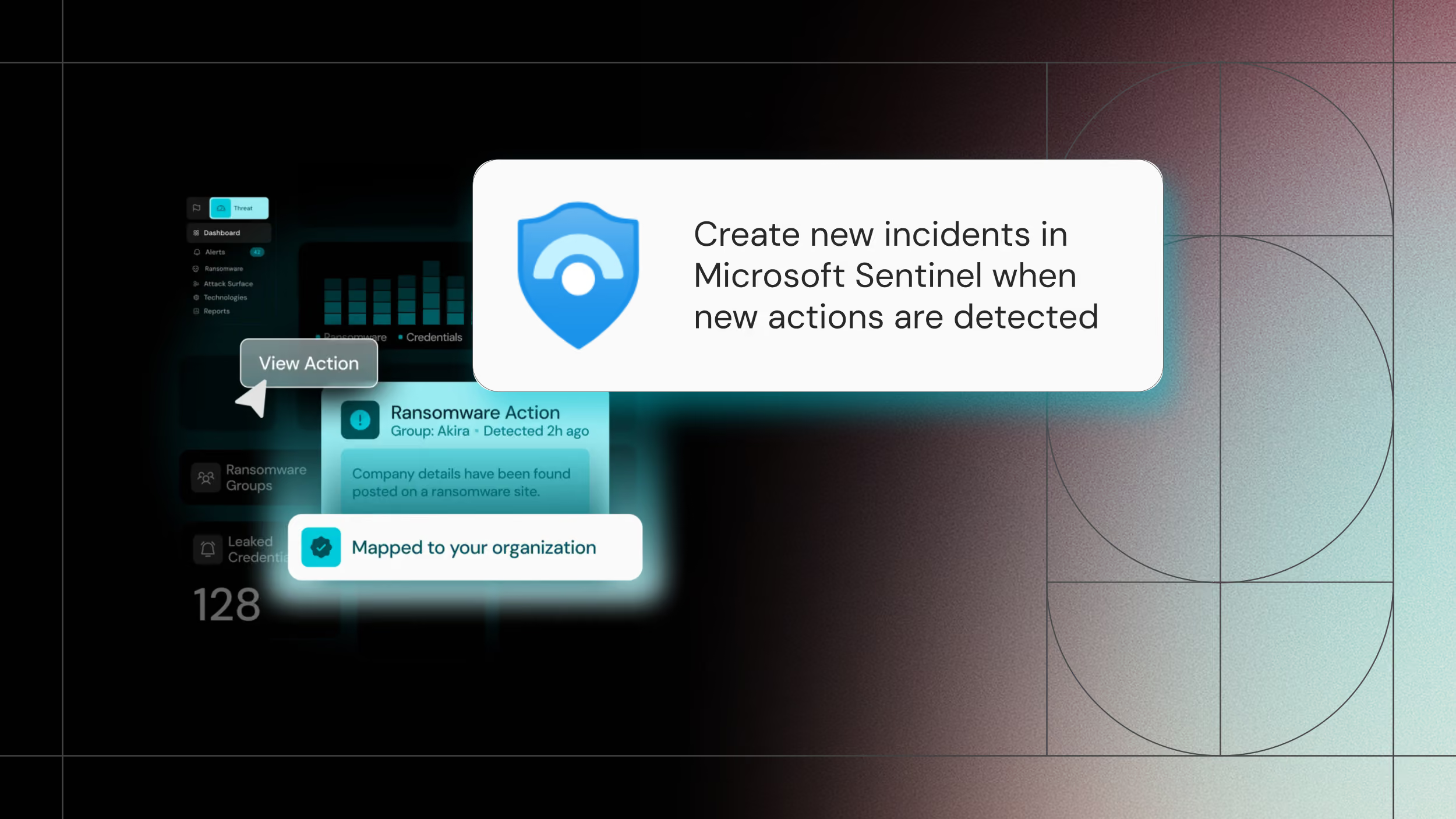
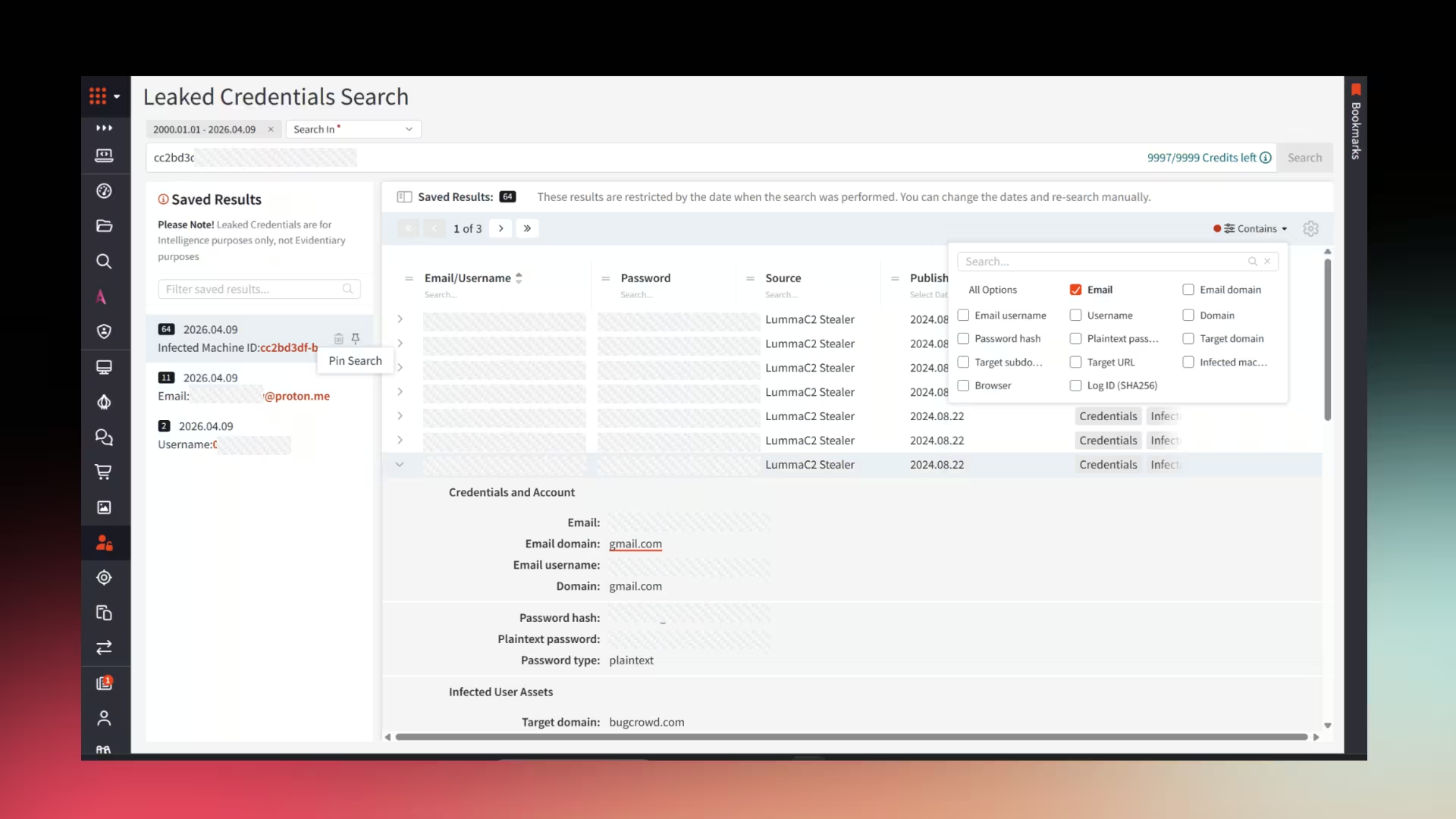
Detection covers compromised third-party credentials in circulation, supplier data appearing in leaks and ransomware disclosures, and attacker activity naming your vendors across forums, marketplaces, and closed channels. You learn a dependency is at risk from evidence, not from the vendor's disclosure timeline.
Public repositories and services like GitHub are monitored continuously for sensitive information tied to your organization, AWS keys, API tokens, and private keys, correlated with your domains and assets. Teams revoke the exposed access before it can be used.
Discovery starts from a single asset domain and maps outward through DNS, certificates, and hosting relationships, surfacing owned infrastructure, shadow IT, forgotten subdomains, cloud assets, and third-party exposure connected to your organization. Suggested assets arrive with evidence, including full origin history screenshots, streamlining how your team confirms or dismisses each one.
Searchlight's research team finds high-impact vulnerabilities in the enterprise software organizations depend on, and tailored alerts, matched to your asset inventory, flag when an emerging vulnerability affects the third-party software you run, often ahead of public disclosure.